- The PDI is the check before you advertise, not the appraisal you did when you bought the car.
- Lights, tyres, brakes, warning lights and a walkaround catch the things a customer will find in five minutes.
- If the list is not done, the car is not ready, however much you want the advert live.
A pre delivery inspection car dealer list is the last short check before a customer can see the car. It is not the decision to buy. That already happened. It is the decision to advertise.
Keep it short enough that it actually gets done. A twelve-page form that lives in a drawer is not an inspection.
What a pre delivery inspection car dealer list is for
A PDI answers one question: can we put this car in front of someone today without apologising for something we already knew? Lights work. Tyres have the tread you are happy to explain, and they match across an axle. The brakes feel like brakes, not like a warning. No warning lamp stays on after the engine is running. Wipers, washers, horn, locks and windows do what they should. The spare, or the repair kit the car was sold with, is actually there.
Then walk around it in daylight. The scrape you hoped the photo hid is the scrape the customer will put a finger on. Note it, price it, or repair it before the advert says the car is clean.
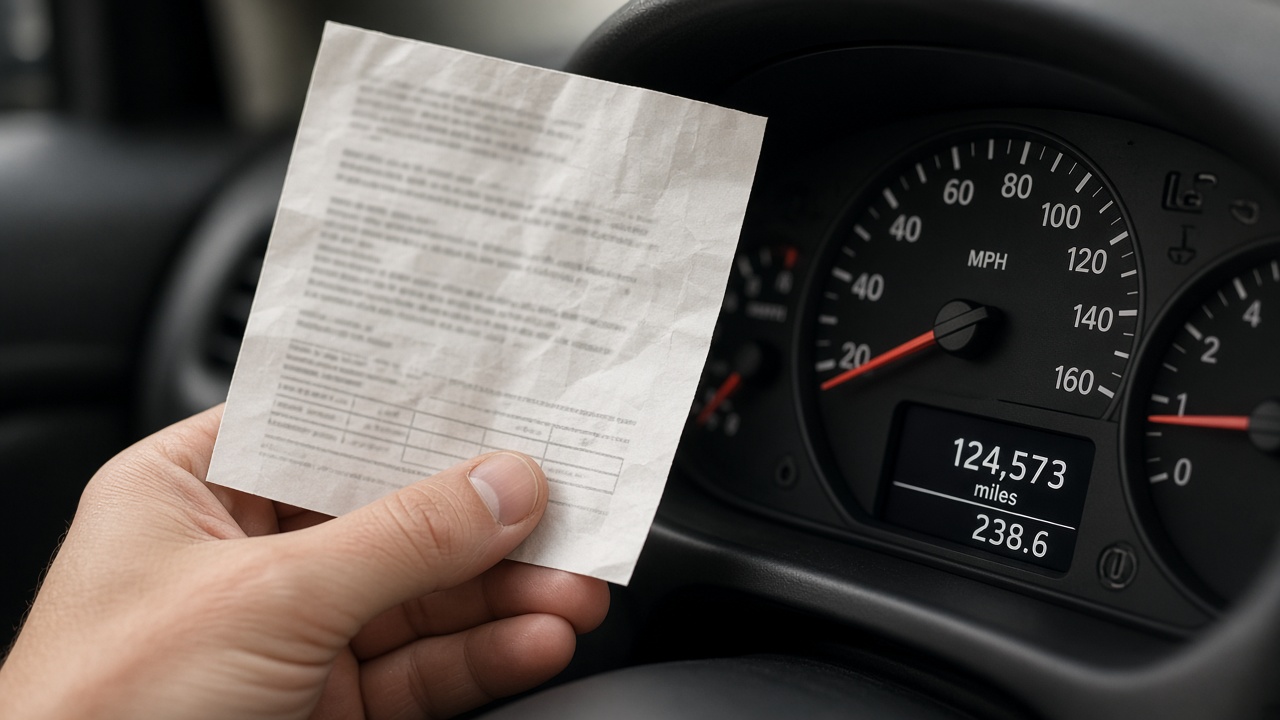
The history belongs in the same pass. If you are going to write that the car has a full service history, the folder is on the passenger seat, not in a pile you meant to sort. If the mileage on the dash does not sit happily next to the MOT record, that is a mileage question, and it is not something to discover after the deposit is paid.
If you would rather do this on a car that came to you, with the documents already in the office, get your buying site. The list does not get shorter. The chase does.
What the list is not
It is not a full appraisal. You are not re-deciding whether you should have bought the car, unless the list finds something the buying check missed. A missed knock, a lamp that was not on the report, a tyre that has gone since the photos: those go back into the price, or back off the pitch. Everything else is preparation.
It is not an MOT. A test pass is a date and a standard. Your list is whether this car, this week, matches the words you are about to publish. A car can pass an MOT and still be a poor advert: filthy, a chip in the glass you called excellent, a service you claimed and cannot show.
It is not a reason to delay a car that is ready. Dealers hide behind a perfect process and the car sits. The list is an afternoon, or an hour, not a fortnight. Used car margins assume the car is for sale while people still want it. A PDI that takes two weeks has become a holding cost.
Write the faults in one place, with a name and a date. When the customer asks, you are reading a note, not reconstructing a Tuesday.
The line that means you do not advertise yet
Do not advertise a car with a warning lamp you have not explained. Do not advertise a car whose tyres you would not put your own family on. Do not advertise a history you do not have in your hand. Those three are how a straightforward sale becomes an argument in the office, and an argument is more expensive than a day of prep.
Everything else can be a sentence in the description, if it is true. A marked bumper you have priced and mentioned is a honest car. The same bumper described as unmarked is a complaint.
Retail-ready means the list is done and the advert matches it. If either half is missing, the car stays in the back until it is not missing. The pressure to "just get it live" is the pressure that creates the Saturday you spend putting right a thing you had already seen.
The same list works for a part exchange you have decided to keep. The appraisal told you what you paid. The PDI tells you what you are willing to claim. They are not the same document, and they should not be done by hoping.
A list someone else can finish
Write the list so a colleague can pick it up. Tyre tread in words you both use, not a shrug. Which lamp. Which noise. Whether the spare was missing or merely buried under a boot full of the last owner's life. A list that only makes sense to the person who wrote it is a list that dies on their day off, and the advert goes up anyway.
Date it. A check from the day the car arrived is not a check from the day you advertise, if the car has been moved, jumped, or left with a flat battery. If more than a few days pass, walk the list again. It is short on purpose, so doing it twice is not a burden. Doing it never is how a customer becomes your inspector.
Keep the list with the stock card, not in a message thread. When you sell, you can see what you claimed and what you fixed. When something comes back, you can see whether you knew. That is quieter than reconstructing the week from memory, and it is fairer on the person who did the work.
If a fault is going to stay, because you have priced the car that way, the advert has to say so in plain words. The list is not a secret between you and the workshop. It is the raw material of the description. A description that is kinder than the list is the thing you will be asked to defend, and you will not enjoy it.
Do the list before the photos if you can. Photos of a dirty car, taken in a hurry, get reused because nobody wants to do them again. Photos after the list show the car you are actually selling. The customer is comparing those pictures with the metal. You should have made the same comparison first.
When the next car is one you chose because you can retail it, the list is calmer. Get your buying site if that is the stock you want on the pitch.
Common questions
Is a PDI the same as an MOT?
No. An MOT is a test against a standard, on the day. A PDI is your own list so the car matches the advert. A fresh MOT does not mean the valet is done or the history is in the description.
Should every car go on a ramp first?
A car you bought unseen should. A car you already appraised on a ramp does not need a second rebuild. It needs the short list, in case something has changed since it arrived.
Who signs the list?
Whoever did the work. A tick with no name is a tick nobody owns when the customer asks.
See what the fees come to on the auction cost calculator, or try the live demo.