- A V5C logbook check tells you who DVLA lists as the registered keeper. That name is not proof the seller owns the car.
- Match the registration, VIN and colour to the car in front of you. A certificate for a different vehicle is a reason to stop.
- DVLA says you should not buy a vehicle that has no V5C. Tax does not come with the car, and the new certificate takes time.
A V5C logbook check is the look you take at the registration certificate before you pay. The V5C logbook is the document people still call the logbook. It shows the registered keeper. It is one page in the story of the car, and it is not the whole story.
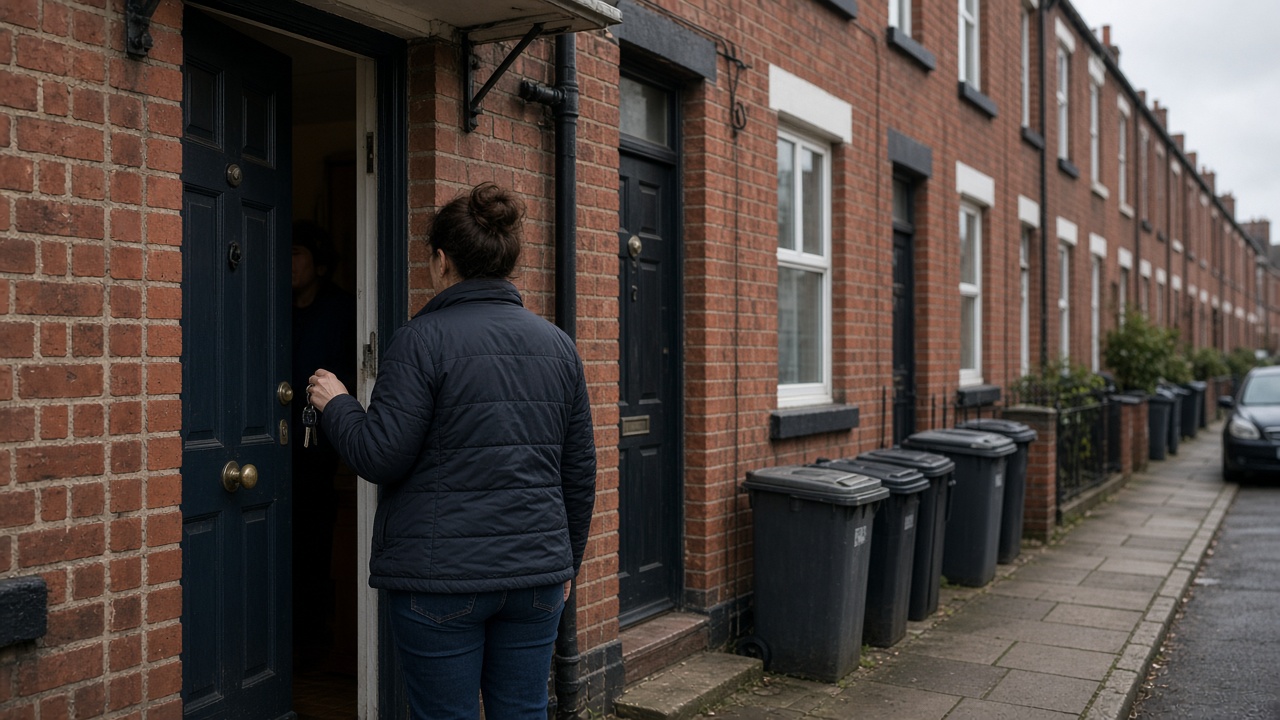
This is the practical check on a driveway or in a hall: does this certificate belong to this car, and to the person selling it. What the trade will pay for the metal is a different job, covered in trade, retail and part-exchange values.
Last reviewed 2 October 2026.
What a V5C logbook check is for
Start with the car, then the paper.
Read the registration, the make, the colour and the VIN on the certificate, and read the same things on the vehicle. They have to be the same car. A tidy certificate for a different VIN is not a small mistake. It is a car you should not be buying.
Then read the keeper's name and address, and the date that keeper was entered. You want that to make sense against the person in front of you. A certificate issued yesterday, to someone who is not here, is a reason to slow down and ask who actually has the right to sell. A private seller who cannot show you the certificate at all is the case DVLA warns about. On the page for registering a used vehicle, GOV.UK says DVLA advises that you should not buy a vehicle that does not have a V5C.
Dealers still meet that car. Someone will tell you the document is in the post, or that the previous garage lost it. You can apply to register a vehicle with no certificate, and DVLA charges a fee for that. The fee is not the point. The point is you are paying for a car whose identity you have not seen. Walk away unless you already know the seller and you are happy to carry that risk.
Keeper, owner, and the money still on the car
The name on the V5C is the registered keeper. Keep that sentence separate from ownership.
A keeper is the person DVLA writes to. An owner is the person who has the right to sell. Those can be the same person. They often are not. A finance company can still have an interest while a keeper's name sits on the certificate, and a keeper can be named on a car they are not free to hand over. Outstanding finance is the usual version of that problem. The certificate will not tell you the settlement figure. A provenance check will not be replaced by a glance at the front page either.
So the check has two results, and you need both before you pay. The certificate matches the car and the seller, or it does not. The history check is clear, or it is not. One without the other is how a plausible driveway sale still goes wrong. Buying from the public, and the checks that sit around the handshake, is set out in how to buy cars direct from the public.
If you would rather have the registration, the miles and the seller's account before you travel, get your buying site. The certificate is still yours to read. The wasted trip is the part you can drop.
What the seller has to do, and what you still check
GOV.UK splits the handover into online or by post. As at 2 October 2026, the seller registering online has to register the vehicle to the buyer, fill in the green new keeper slip and give it to the buyer, and destroy the old V5C. By post, the seller completes the right section for the style of certificate they hold, both sides sign the older-style declaration, the buyer gets the green slip, and the V5C goes to DVLA.
The green slip is not a substitute for the check you do before you pay. It is what you are given once the sale is happening. Read it against the car. A slip from an older certificate, or a date that does not match the last issue date you can see, is a question for before the money moves, not after.
You also tax the vehicle, or declare it off the road, before you use it. GOV.UK is plain about this on the page for telling DVLA you have bought a vehicle: the tax is not transferred when you buy. A seller who says the tax is still on it, so you can drive it home, is describing the old rule. Do not plan the journey on that sentence.
When the new V5C arrives, it is your job to check every detail. GOV.UK says that is your responsibility. Anything wrong goes back to DVLA, and a replacement usually takes up to four weeks. If you never received one, contact them before six weeks have passed, or you are into a fresh application. For a used car registered online, the new certificate is usually five to seven working days rather than the ordinary four weeks. Those times are the ones published on 2 October 2026. If you are reading this later, open the page again before you promise a customer a date.
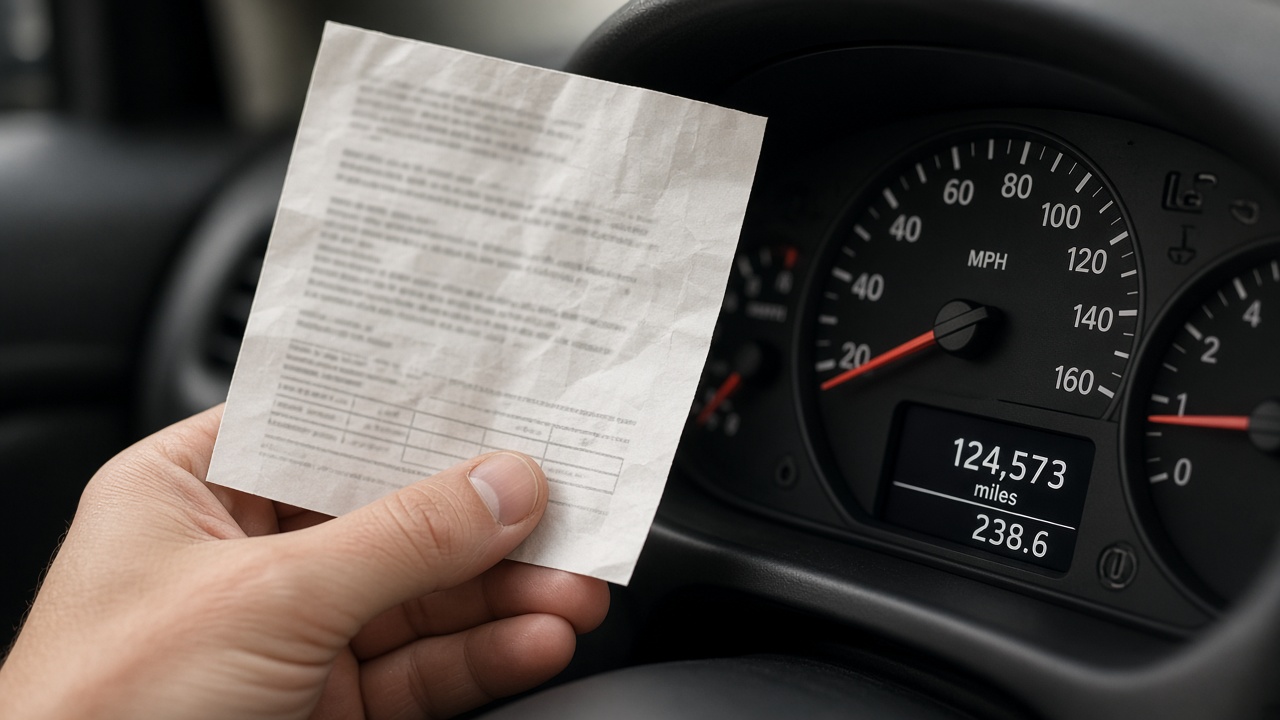
The mileage on the certificate is a line in the history, not a verdict. Compare it with the MOT record. A jump, or a figure that is lower than an earlier test, is the discrepancy you already know how to read. The method is in how to spot a mileage discrepancy. The V5C does not settle it on its own.
When to stop
Stop when the certificate and the car disagree, when the seller cannot produce a V5C, or when the keeper on the document is not the person selling and nobody can explain that cleanly. Stop when the provenance check and the paper tell you different stories. A lower price does not repair a car whose identity you do not trust.
Write down what you saw: the VIN you read, the keeper's name, the issue date, and whether you were shown the green slip or the full certificate. "Looked fine" is not a note you can use when the new V5C arrives with a surprise on it.
The same habit applies in a hall. The catalogue is a start. The certificate, when you can see it, still has to match the car on the truck. If it does not, the lot is not cheaper. It is a car you cannot stand on the pitch with a straight face.
Get your buying site when the next seller should send the registration before you leave the office. A V5C logbook check is still a few minutes with the document in your hand. It is cheaper than discovering the problem after you have paid.
Common questions
Does a V5C prove the seller owns the car?
No. It names the registered keeper. Ownership is a separate question, and a finance company can still have an interest while a keeper's name is on the certificate.
Should I buy a car with no V5C?
DVLA's guidance is that you should not. You can apply to register it yourself, and there is a fee, but you are taking the car without the document that should have come with it.
How soon does the new V5C arrive?
GOV.UK says you usually get it within four weeks. If the car is used and the seller registered it to you online, that drops to five to seven working days. As at 2 October 2026.
See what the fees come to on the auction cost calculator, or try the live demo.