- Start from what you can sell the car for, then take off prep and the margin you need. The allowance is what is left.
- A bigger allowance to save a deal is a price cut on the car you are selling. Count it that way.
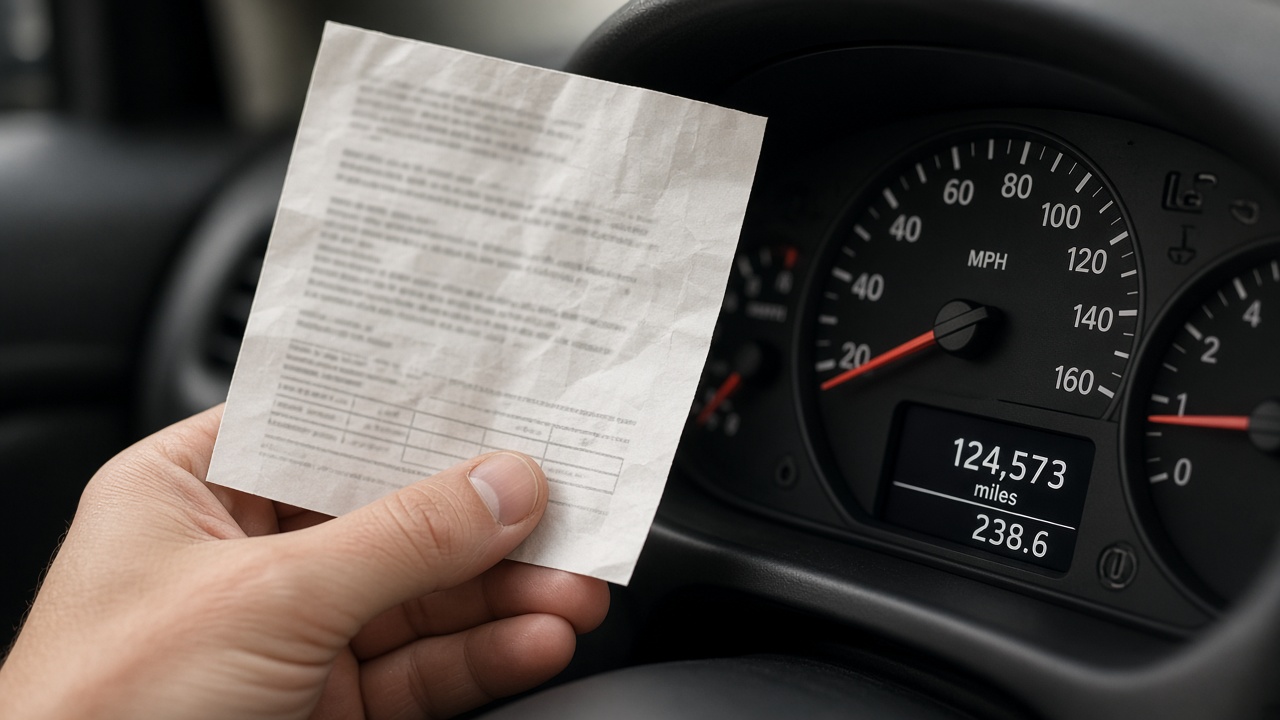
- Check mileage, MOT history, finance and the V5C before the number is final.
What are you actually buying?
A part exchange is a used car you are choosing to stock, paid for by a discount on something else. If you would not buy it from a stranger at that price, you should not take it in to close a sale.
Look at the car first and the deal second. Registration, mileage, MOT history, service evidence, outstanding finance, and a drive. The mileage guide is the two-minute version of the history check. The values guide explains why a retail screen price is the wrong allowance.
How do you get to the allowance?
Do the sum in this order, on paper, before you negotiate.
- Retail. What will you advertise it at, after a valet and any work you are happy to do? Use similar cars for sale nearby, not a national average that ignores your town.
- Prep. Tyres, advisories, a service, and anything you saw on the ramp. If you do not know, you have not finished the appraisal.
- Margin and time. What you need left after prep, and a car that might sit. A car you can sell in a fortnight can carry a stronger allowance than one you will still own in the spring.
- Allowance. Retail, minus prep, minus that margin. That is the most you put into the deal.
If the customer has a settlement to clear, the allowance has to cover it or they have to pay the difference. A car with finance you have not checked is not a part exchange yet.
Where do dealers give the margin away?
The usual leak is a round number offered to keep the customer in the showroom. Another is matching a figure from a buying site that never saw the car. Both feel helpful. Both are a discount.
Write the allowance and the prep next to the profit on the car you are selling. If the used car needs more work than you thought, the new deal did not make what the paperwork says.
What do you tell the customer?
Tell them the allowance, what it assumes, and what would change it. People accept a lower number more easily when the reasons are specific: the advisories, the mileage history, the tyres.
They do not accept a number that was higher on the phone.
If their car is worth more to them as a private sale than it is to you as stock, say that. Some will sell it themselves and come back. Some will take your number because they want one visit. Either result is better than overpaying to avoid the conversation.
Common questions
Should the allowance match what the customer saw online?
Only if that figure is what you can sell the car for after prep. Online retail prices assume a car that is ready. Theirs usually is not.
What if they need a higher allowance to make the deal work?
Then the deal is more expensive than it looks. Raise the price of the car you are selling, or let it go. Do not hide the discount inside the part exchange.
When should I refuse a part exchange?
When you would not buy the same car for stock at that money: poor history, finance you cannot clear, or prep that wipes the margin.
See what the fees come to on the auction cost calculator, or try the live demo.